Get a better-trained dog today! Email us at info@doglogic.llc!
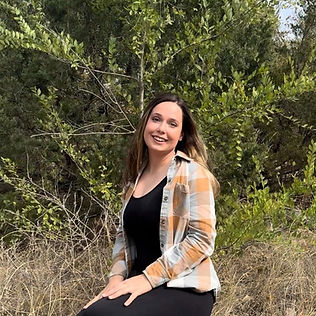
Jo Griffith
Founder and Lead Dog Trainer
"A dog can’t succeed in a world it doesn’t understand."
About Jo
Jo Griffith began professionally working with animal behavior in 2019, as an Animal Caretaker at The Zooseum in downtown Kearney. After she deployed with the U.S. Army, she worked at Lost Creek Dog Training Academy, The Retreat at Cottonwood, Happy Tails Pet Boarding, Hilltop Pet Boarding, and The Kearney Area Animal Shelter, all for the purpose of gaining knowledge in the animal care field. She went to college for Dog Training and Grooming, and has spent thousands of hours working directly with hundreds of breeds of dogs. If anyone knows how to care for your dogs, it’s Jo.
Our Pups

Odin
Odin is our 100lb, Belgian Malinois/Dutch Shepherd/German Shepherd mix. Odin became a part of the family when he was 7 months old, after we adopted him from a local Animal Shelter. It was shortly after I got him that I discovered how bad his dog reactivity was and that he was dog-aggressive. Odin stressed me out for what felt like eternity. That's when I switched to understanding my dog's behavior instead of just trying to stop it. Odin is now able to go on walks, ignore dogs, and be the confident, silly boy that he is.

Bandit
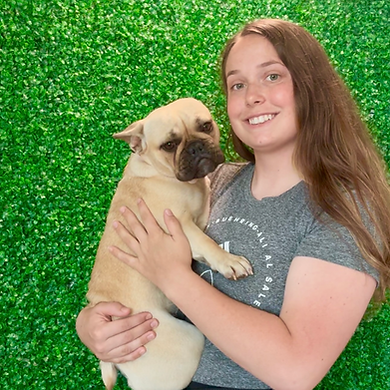
Bandit is our 6lb Chihuahua that we met at the "I Love My Dog Expo" in Lincoln, NE. Bandit was found in the back of a U-Haul, emaciated with 3 cats and a Black Lab. He suffered a broken jaw and the loss of an eye. Because of his neglectful and abusive past, Bandit is working on learning to trust people again. Training with him takes patience and understanding of where he came from and how he feels. He enjoys snacks, sleeping, playing with Odin, and cuddling with his favorite human, his dad.

Our Methodology
The Griffith Method
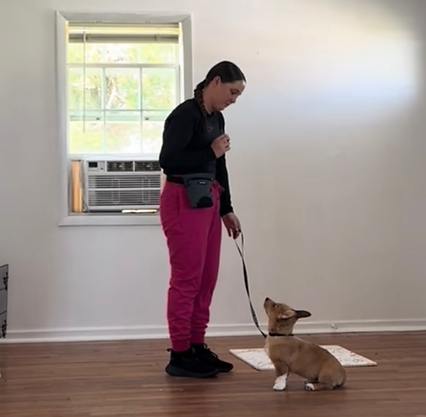
At Dog Logic LLC, we use the Griffith Method, and if you haven’t heard of it yet, that’s because we created it. This approach is built on understanding the why behind behavior before ever jumping into training, focusing on clear communication, strong relationships, and real-world results. Instead of forcing compliance, we guide dogs toward better choices through structure, redirection, and intentional use of proven learning principles.
Diagnosis Before Training
Training does not begin with commands; it begins with understanding. Every behavior a dog displays has a cause, whether it’s fear, frustration, confusion, reinforcement history, or environmental pressure. Without identifying the “why” behind the behavior, any attempt at training is simply guesswork. The Griffith Method prioritizes accurate assessment first, ensuring that the root of the behavior is addressed rather than just the symptom. You don’t fix behavior, you solve the reason behind it.
Relationship Over Compliance
True reliability is built on trust. A dog that feels safe, understood, and connected to their handler will naturally be more willing to engage and respond. Rather than forcing compliance, the Griffith Method focuses on building a strong relationship that creates clarity and cooperation. When a dog trusts the person guiding them, they are not just responding; they are choosing to. A strong bond creates willingness, and willingness creates reliability.
Redirection Over Correction
Unwanted behavior is not simply something to suppress; it is something to replace. The Griffith Method emphasizes interrupting behavior and guiding the dog toward a more appropriate alternative that fulfills the same need. Instead of relying on heavy corrections, the focus is on teaching the dog what to do, not just what not to do. Lasting change comes from clarity and guidance, not suppression. Don’t just stop the behavior; replace it.
Balanced Use of Learning
A well-rounded dog is created through a balanced understanding of how behavior is shaped. The Griffith Method incorporates all four quadrants of operant conditioning, using each thoughtfully to guide learning, build clarity, and create reliability. By applying reinforcement and appropriate consequences in a way that fits the individual dog, we help them not only learn what is expected but also feel confident in their choices. This approach is not about strict categories, but about using the full picture of learning to develop a dog that is both responsive and well-balanced in real life.
Train the Dog in Front of You
No two dogs are the same, and no single approach works universally. The Griffith Method adapts to the individual dog’s temperament, drive, history, and current emotional state while maintaining consistent principles. Training is not about forcing a dog into a system; it's about applying a system in a way that fits the dog. The method remains consistent, but the application is always flexible to meet the needs of the individual.
Behavior Is Communication
All behavior serves a purpose and communicates something about the dog’s internal state or environment. Reactivity, aggression, avoidance, and excitement are not random; they are expressions of need, stress, or learned patterns. The Griffith Method focuses on interpreting these signals accurately and addressing the root cause rather than simply reacting to the behavior itself. When the message behind the behavior is understood, meaningful and lasting change becomes possible.
The Handler Shapes the Outcome
Training is not just about the dog; it is equally about the human. A dog’s success is directly influenced by the handler’s timing, consistency, awareness, and emotional control. Many training issues stem from unclear communication or inconsistent expectations from the human side. The Griffith Method places responsibility on the handler to develop the skills necessary to guide the dog effectively. Better humans create better dogs.